Personalized Medical Care & Dedicated International Patient Concierge


Hair Loss & Hair Restoration · Consultation Required
Hair Loss Recovery Care
Hair Loss Recovery Care is a non-surgical hair restoration service that uses medical scalp micropigmentation to recreate the appearance of natural hair density on the scalp.
Schedule a ConsultationWhat is Hair Loss Recovery Care?

Hair Loss Recovery Care is a non-surgical hair restoration service that uses medical scalp micropigmentation to recreate the appearance of natural hair density on the scalp. Using an ultra-fine needling technique, medical-grade pigment is deposited into the superficial layer of the scalp in thousands of tiny, individually placed impressions. Each impression is designed to mimic the size, tone, and natural irregularity of a real hair follicle emerging from the skin. Viewed as a whole, these impressions reduce the visual contrast between pale scalp and darker hair, so thinning areas read as denser and hairlines read as more defined.
It is important to be precise about what this treatment is and is not. Scalp micropigmentation is a cosmetic camouflage procedure, not a hair growth procedure. It does not regrow hair, does not reactivate dormant follicles, and does not alter the biological process causing hair loss. What it changes is how the scalp looks — and for many patients, that visual change is the specific outcome they are seeking after other approaches have not delivered the coverage they wanted.
Who Needs Hair Loss Recovery Care?
Candidacy for Hair Loss Recovery Care is assessed individually and depends on scalp condition, hair loss pattern, skin health, existing hair colour and texture, and — importantly — the patient's expectations. The service tends to suit people who want a visible improvement in how full their hair looks, who prefer to avoid surgery, and who understand that the treatment restores appearance rather than growth. Suitability is confirmed only after direct assessment.
Patients who commonly benefit from Hair Loss Recovery Care include:
- Adults across a wide age range, commonly in their 20s through 60s, who have noticed a gradual change in hair density or hairline position and want a non-surgical way to address how it looks. Younger patients often present with early hairline recession that has begun to affect confidence in photographs and social settings, while patients in later decades more often present with diffuse thinning across the mid-scalp and crown. Treatment planning differs accordingly, and hairline placement in particular is designed with age-appropriate proportion in mind rather than recreating an adolescent hairline.
- Patients with a receding, uneven, or M-shaped hairline who want the frontal edge redefined and rebalanced. Recession at the temporal points often progresses asymmetrically, leaving one side further back than the other, which draws the eye and can make styling frustrating. Micropigmentation allows the hairline to be redesigned with a softer, irregular, natural-looking edge rather than a hard line, and the temporal corners to be visually re-established in proportion to the face.
- Patients with a hairline that appears too high, too square, or too angular, whether from hair loss or natural anatomy. A squared-off frontal edge can look unnaturally severe, particularly on a shaved or closely cropped scalp. Density and edge shaping can be used to round the corners, lower the visual starting point of the hairline where appropriate, and soften the transition into the temples so the overall framing of the face looks more relaxed and more natural.
- Patients with diffuse thinning where the scalp is visible through the hair, especially at the parting line, mid-scalp, or crown. The core visual problem in diffuse thinning is contrast — pale scalp showing between darker hairs. By darkening the scalp background in a controlled, follicle-mimicking pattern, that contrast is reduced and the same amount of existing hair reads as noticeably thicker, particularly under overhead lighting where thinning is usually most obvious.
- Patients with localised or patchy areas of hair loss who want a single region addressed rather than the whole scalp. Return Clinic treats partial areas and full areas alike, so a patient concerned only about one patch, one temple, or the crown does not need to commit to full-scalp treatment. Blending is designed so that the treated zone transitions naturally into surrounding hair without a visible border.
Meet the Specialist in Hair Loss & Hair Restoration
Hair Loss Recovery Care at Return Clinic is delivered by a trained scalp micropigmentation team working under physician-led medical governance rather than as a standalone cosmetic service. That distinction shapes how consultations are run, how candidacy is screened, and how safety standards are maintained.
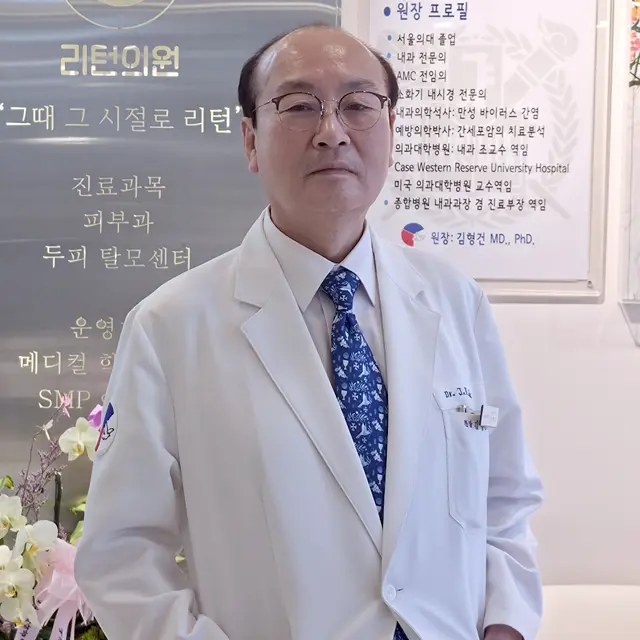
Dr. Hyung Geon Kim, M.D., Ph.D. — Medical Leadership
Dr. Hyung Geon Kim is a board-certified Internal Medicine specialist and certified Gastrointestinal Endoscopy subspecialist. He graduated from Seoul National University College of Medicine, completed fellowship training at Asan Medical Center, and holds a Master's degree in Internal Medicine with research in chronic viral hepatitis alongside a Ph.D. in Preventive Medicine with research analysing hepatocellular carcinoma treatment. He has served as Assistant Professor in the Department of Internal Medicine at a medical university hospital, as Professor at Case Western Reserve University Hospital in the United States, and as both Chief of Internal Medicine and Medical Director at a general hospital. His clinical specialties are gastroenterology, upper and lower endoscopy, chronic hepatitis B and C, liver cirrhosis, fatty liver disease, and hepatocellular carcinoma. He holds Gastrointestinal Endoscopy Subspecialist certification from the Korean Society of Gastrointestinal Endoscopy (Certification No. 99-533, valid 1 August 2025 to 31 July 2030) and is a member of that society.
Dr. Kim's role in Hair Loss Recovery Care is one of medical governance and patient safety rather than direct aesthetic technique. His internal medicine background is directly relevant in one important respect: hair loss is not always a purely cosmetic finding. Thyroid disorders, nutritional deficiency, chronic liver disease, anaemia, medication effects, and other systemic factors can all influence hair density. A consultation overseen by an internal medicine specialist means patients whose presentation suggests an underlying medical contributor can be identified and directed toward appropriate evaluation, rather than being treated cosmetically without that question ever being asked. His decades of hospital leadership and academic practice also inform the clinic's standards for hygiene, single-use materials, documentation, informed consent, and adverse-event protocols.
Hair Loss Recovery Care Treatment Areas and Expected Improvements
Return Clinic treats a single area or the entire scalp — both are equally valid treatment plans. The area or areas selected are determined during consultation based on where the patient's concern actually lies and where pigmentation is likely to make a meaningful visual difference.
- Frontal hairline and temporal points: The hairline frames the entire face, so it is both the most requested treatment zone and the most technically demanding. Treatment here focuses on re-establishing an edge that looks naturally irregular rather than drawn, with softer, lighter impressions at the leading edge and increasing density behind it to mimic how a real hairline fades in. Temporal recession points are rebuilt in proportion to the patient's facial structure and age, and asymmetry between the two sides is corrected during design rather than left to chance.
- Sparse or missing frontal hair: Where the front section still has hair but that hair has become fine, sparse, and see-through, pigmentation is used to darken the scalp background between the remaining strands. This reduces light reflecting off exposed scalp, which is the main reason thinning becomes obvious in photographs and under overhead lighting. The existing hair is left entirely undisturbed; only the visual backdrop against which it sits is changed, and the combined effect typically reads as a fuller, more even front section.
- Crown and vertex: The crown is a common site of early visible thinning and is difficult to conceal through styling because hair radiates outward from the whorl, exposing scalp at the centre. Treatment here follows the natural growth direction and swirl pattern of the crown so that the pigmented area moves with the surrounding hair instead of appearing as a flat patch. Density is graded outward from the centre so the treated zone blends into surrounding coverage without a visible edge.
- Mid-scalp and parting line: Widening of the parting is one of the earliest and most distressing signs of diffuse thinning, particularly for patients who wear their hair longer. Pigment placed along and around the parting narrows the apparent gap and reduces the pale strip that draws the eye. For patients with longer hair this can be one of the highest-impact treatments relative to the small surface area actually treated, since the parting is what other people see most directly from above.
- Irregular, patchy, and localised hair loss areas: Patchy loss creates a mismatch in density that the eye detects immediately, even when the affected area is small. Treatment targets the specific patch and feathers outward into surrounding hair, matching tone and impression density to the adjacent region rather than filling the patch uniformly. This blending work is what prevents a treated patch from becoming a different kind of visible irregularity.
- Scalp scars, including post-transplant scarring: Donor-strip scars, punch scars, and scars from injury are camouflaged by reducing the tonal contrast between scar tissue and surrounding scalp. Scar tissue behaves differently from healthy skin — it can hold pigment unpredictably, may fade faster, and sometimes requires a test area before full treatment. For this reason, scar camouflage is approached with additional caution, usually across more sessions, and with a frank discussion of realistic improvement rather than complete disappearance.
- Full-scalp treatment for extensive hair loss or shaved heads: For patients with advanced hair loss or those who choose to shave, full-scalp treatment creates an even, natural-looking shadow across the entire scalp together with a designed hairline. The intended result is the appearance of a closely cropped head of hair by choice rather than a scalp exposed by loss, and density is calibrated to the patient's own skin tone so that the finish reads as authentic in daylight as well as indoors.
Hair Loss Recovery Care Treatment Process and Timeline
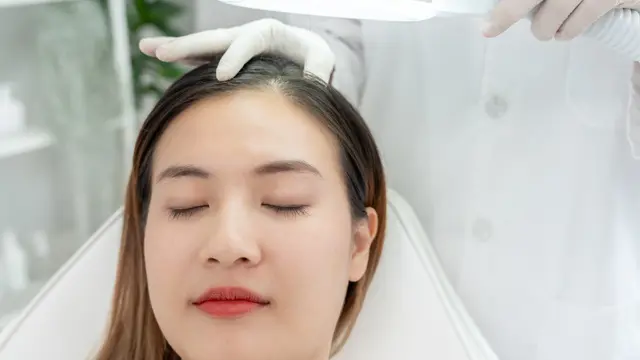
Hair Loss Recovery Care follows a structured, staged process. The number of sessions varies with the size of the area, the density required, skin response, and how the pigment settles between visits.
- Consultation, scalp assessment, and medical screening. The practitioner examines the scalp, reviews hair loss pattern and history, checks for scalp conditions or active skin problems, and discusses previous treatments including any prior transplant surgery or micropigmentation. Because Hair Loss Recovery Care sits within a physician-supervised clinic, this stage also includes screening for signals that hair loss may have an underlying medical contributor warranting evaluation. Expectations, limitations, aftercare requirements, and the likely number of sessions are set out plainly at this stage.
- Hairline design, pigment matching, and consent. The hairline or treatment boundary is drawn on the scalp and reviewed together with the patient, and adjusted until the shape, height, and temporal proportion are agreed. Pigment tone is selected to match natural hair colour and skin tone, erring toward a slightly conservative shade that can be deepened in later sessions. Written informed consent is completed once the patient has had the opportunity to ask questions.
- First treatment session. Pigment is deposited into the superficial scalp using fine needling technique, working systematically across the planned area. Sessions typically run in the range of one to a few hours depending on the size of the treatment area. Most patients describe the sensation as mild to moderate discomfort rather than significant pain, though sensitivity varies by individual and is generally higher along the hairline and over scar tissue. The first session establishes foundation density and shape rather than final depth of colour.
- Immediate aftercare and same-day return to normal life. Mild redness and slight tenderness across the treated area are common immediately afterward and usually settle within a short period. There is no surgical wound and no bandaging, and patients can generally return to normal daily activity the same day. Specific instructions are provided: avoid alcohol immediately after treatment; avoid strenuous exercise, swimming, saunas, and steam rooms while the scalp settles; do not shower or wet the treated area for the first 24 hours; afterward wash gently without scrubbing or rubbing the scalp hard with the hands; and avoid perms and hair dye for approximately one week before and one week after treatment. Beyond these points, no special restrictions are required.
- Follow-up sessions to build density and refine tone. Subsequent sessions are scheduled after the scalp has settled and the practitioner can see how the pigment has taken. Density, tone, and edge detail are refined progressively across these visits, and any areas that have faded unevenly are addressed. Working in stages is what allows the final result to be tailored rather than fixed at the first attempt.
- Review and long-term maintenance planning. Once the desired appearance is reached, patients are reviewed and advised on maintenance. Because scalp micropigmentation is semi-permanent, pigment softens gradually over time, and periodic top-up sessions are used to maintain tone and definition. The interval between top-ups varies considerably by individual, and sun exposure is one of the most significant factors in how quickly pigment fades.
Downtime: Downtime is minimal. Expect mild redness and tenderness for a short period after each session, with normal daily activity resumed the same day, subject to the aftercare restrictions above.
Hair Loss Recovery Care Results, Safety, and Longevity
An initial visual change is apparent immediately after the first session, but the honest answer is that the first session is not the final result. Pigment characteristically appears darker and sharper in the days immediately after treatment before settling to a softer, more natural tone. Final appearance is achieved progressively across the planned course of sessions, and it is normal for the result to look somewhat different at the two-week mark than it did on the day of treatment.
Scalp micropigmentation is semi-permanent, not permanent. Pigment gradually softens and lightens over time, at a rate that differs substantially between individuals depending on skin type, immune response, sun exposure, scalp care habits, and the depth and density of the original application. Periodic top-up sessions maintain definition and tone. Return Clinic does not describe this treatment as permanent, and patients should be cautious of any provider who does.
The safety profile of scalp micropigmentation compares favourably with surgical hair restoration because it involves no incisions, no tissue harvesting, and no general anaesthesia. Nonetheless, it is a procedure that breaks the skin surface, and it carries real if uncommon risks. Expected short-term effects include redness, mild swelling, tenderness, and occasional pinpoint scabbing. Less common risks include infection, allergic or hypersensitivity reaction to pigment, uneven pigment uptake, unexpected colour shift or fading, and — particularly over scar tissue — unpredictable retention requiring additional correction. Patients prone to keloid scarring, those with active scalp disease, and those with unhealed scalp wounds require specific assessment before treatment is considered. Serious complications are rare but possible, and any sign of spreading redness, increasing pain, fever, or discharge after treatment should prompt urgent contact with the clinic or a medical provider without delay.
Return Clinic's conservative, staged approach exists precisely to manage these risks. Starting lighter and building gradually reduces the likelihood of overcorrection; reviewing between sessions allows pigment behaviour to be observed before more is committed; and physician-supervised protocols govern hygiene, single-use materials, and the handling of any adverse reaction. No practitioner can eliminate risk entirely, and individual results cannot be guaranteed. A personal consultation with a qualified practitioner is required before any treatment decision.
Why Choose Return Clinic for Hair Loss Recovery Care?
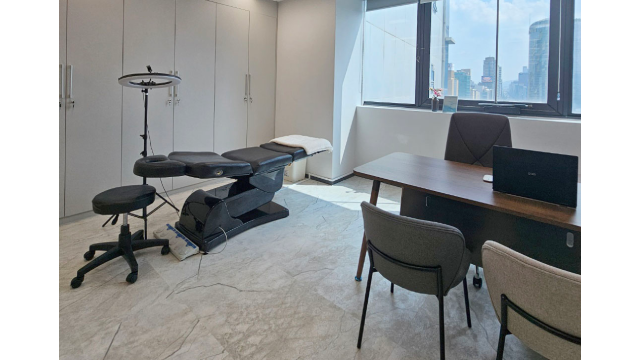
Return Clinic approaches hair loss as a concern deserving genuine medical attention rather than a quick cosmetic transaction. Hair Loss Recovery Care is positioned within the clinic's Stem Cell & Dermatology department, which means consultations happen inside a medical framework: scalp condition is assessed properly, candidacy is screened honestly, and patients whose hair loss may have an underlying medical driver are pointed toward appropriate evaluation rather than simply being sold a treatment.
That medical framing is reinforced by the clinic's governance. Oversight from Dr. Hyung Geon Kim — a board-certified Internal Medicine specialist with a Ph.D., Seoul National University College of Medicine training, fellowship experience at Asan Medical Center, and prior appointments as a university hospital professor in the United States and as Chief of Internal Medicine and Medical Director at a general hospital — brings hospital-standard expectations for consent, hygiene, documentation, and patient safety into an aesthetic setting where such standards are not universal.
Alongside that governance sits genuine technical craft. Return Clinic's scalp micropigmentation practitioners treat hairline design as a discipline in its own right, working from facial proportion, hair pattern, skin tone, and patient preference to a design that is drawn, reviewed, and agreed before any pigment is placed. The clinic treats one area or the whole scalp with equal seriousness, and its international patient experience means English-speaking patients travelling for treatment are supported through consultation, treatment, and follow-up with clear communication throughout.
Clinic USPs:
- Physician-supervised scalp micropigmentation: Treatment is delivered under the medical oversight of a board-certified Internal Medicine specialist with a Ph.D. and university hospital leadership experience in both Korea and the United States — so hair loss is screened as a medical concern, not only a cosmetic one.
- One area or the entire scalp — both welcome: Whether the concern is a single patch, one temple, the crown, or full-scalp coverage on a shaved head, treatment is scoped to what the patient actually needs, with no pressure to treat more than necessary.
- Compatible with hair transplant planning: Because the technique is non-surgical, it can be planned before, after, or alongside hair transplantation — adding visual density between grafts and softening the appearance of donor-area and recipient-area scarring.
- Conservative, staged, consent-led protocols: Density and tone are built gradually across sessions with review between visits, so the patient retains control at every stage — with candid discussion of limitations, risks, and realistic outcomes before treatment begins.
- Minimal downtime and international patient support: Normal daily activity resumes the same day, with straightforward aftercare, and English-speaking patients are supported from first consultation through follow-up.
Real Patient Experiences
The following are anonymised, composite examples reflecting the patient profiles and typical treatment courses described above. They are illustrative and are not presented as verified individual testimonials. Individual results vary, and no outcome is guaranteed.
Hairline Restoration Patient, 30s
This patient had noticed progressive recession at both temporal points over several years, with the left side visibly further back than the right, and had become self-conscious in photographs and video calls. A conservative hairline was designed with a softened, irregular leading edge and the temporal corners rebuilt in proportion to his facial structure, then built across staged sessions. He reported that the frontal edge looked more balanced and more defined, and that he felt less need to style his hair forward to compensate.
Post-Transplant Density and Scar Camouflage Patient, 40s
This patient had undergone hair transplant surgery previously and was satisfied with the growth achieved, but remained conscious of a donor-area scar that showed whenever his hair was cut short, and felt the density between grafts was thinner than he had hoped. Treatment focused on reducing the tonal contrast at the scar site and adding background density across the mid-scalp, delivered cautiously across additional sessions given the presence of scar tissue. He described the scar as considerably less noticeable at his usual hair length and reported feeling more comfortable wearing his hair shorter.
Take the Next Step Toward a Fuller-Looking Hairline
You do not have to keep styling around a thinning hairline, avoiding bright lighting, or hiding from photographs.
Primary CTA: Book your private Hair Loss Recovery Care consultation at Return Clinic today. Our team will assess your scalp condition and hair loss pattern in detail, screen for factors that may warrant medical evaluation, review your hairline design options in person, and explain honestly what scalp micropigmentation can and cannot achieve for you — with no obligation to proceed and no pressure to treat more than you need.
Secondary option: Prefer to speak with someone first? Call our patient coordination desk to reach a Hair Loss Recovery Care coordinator, who can answer questions about candidacy, session planning, aftercare requirements, and international patient scheduling before you book.
Individual clinical results and recovery timelines may vary depending on scalp/skin condition and personalized treatment planning. Temporary redness, mild swelling, or tenderness may occur following treatment.
Other Services
Explore additional treatments offered by our specialists.

Liftera-A2 HIFU Lifting
Liftera-A2 HIFU lifting is a non-surgical skin tightening procedure that uses high-intensity focused ultrasound to deliver heat energy to precise depths beneath the skin surface.
Learn More

Medical SMP Hair Loss Care
Scalp micropigmentation occupies a distinct position and is not a substitute for medical or surgical hair-loss management.
Learn More

SMP Hairline
SMP hairline treatment applies this technique specifically to the frontal hairline — the area that frames the face and is usually the first thing both the patient and other people notice.
Learn More