Personalized Medical Care & Dedicated International Patient Concierge


Laser Lifting & Skin Tightening · Consultation Required
Liftera-A2 HIFU Lifting
Liftera-A2 HIFU lifting is a non-surgical skin tightening procedure that uses high-intensity focused ultrasound to deliver heat energy to precise depths beneath the skin surface.
Schedule a ConsultationWhat Is Liftera-A2 HIFU Lifting?

Liftera-A2 HIFU lifting is a non-surgical skin tightening procedure that uses high-intensity focused ultrasound to deliver heat energy to precise depths beneath the skin surface. The energy passes through the outer skin without damaging it and converges at a focal point in the deeper tissue, where controlled thermal coagulation points are created. The body responds to these micro-points through its natural wound-healing and collagen remodelling process, which may gradually contribute to firmer, more supported skin over the following weeks and months.
Unlike a laser, which primarily acts on the skin surface and upper layers, focused ultrasound is designed to reach deeper structural planes — including the superficial musculoaponeurotic system (SMAS) layer that plastic surgeons address during surgical lifting. This is why HIFU lifting is often discussed as a non-surgical alternative for patients who want structural support without an operation, general anaesthesia, or extended recovery.
Who Needs Liftera-A2 HIFU Lifting Treatment?
Candidacy for Liftera-A2 HIFU lifting depends far more on the degree and pattern of skin laxity than on age alone. The most suitable candidates typically have mild to moderate loss of firmness, reasonable skin quality, and realistic expectations about what a non-surgical energy-based procedure can and cannot achieve. A medical consultation is always required before treatment is confirmed.
Liftera-A2 HIFU lifting may be considered appropriate for patients who:
- Are approximately in their late 20s through their 60s and are beginning to notice that facial contours look less defined than they did previously — particularly a softening of the jawline, a heavier lower face, or cheeks that appear to sit lower than before.
- Are concerned about early to moderate jawline and lower-face laxity, including the loss of a clean angle between the jaw and the neck, mild jowl formation, or the appearance of "sliding" tissue that becomes more visible in photographs than in the mirror.
- Notice submental and neck laxity, such as looser skin under the chin, a less defined chin–neck junction, or fine crepey texture along the front of the neck that makes the neck look older than the face.
- Have deepening nasolabial folds or mid-face descent that appear to be driven by tissue support and skin laxity rather than by volume loss alone, and who want to address the underlying firmness before considering volumising options.
- Prefer a non-surgical approach and are not ready — clinically, financially, or personally — to consider a surgical facelift, but still want a procedure that works at a structural level rather than only on the skin surface.
- Want minimal interruption to daily life, such as working professionals, caregivers, or international visitors who cannot accommodate the downtime, wound care, and follow-up schedule associated with surgery.
- Are seeking maintenance rather than dramatic change, including patients who have previously had HIFU, thread lifting, or other tightening treatments and want to support their existing results over time.
- Prefer a conservative, medically governed treatment plan, and value a clinic that will decline or defer treatment when it is not clinically indicated rather than proceeding by default.
Meet the Specialist in Laser Lifting & Skin Tightening at Return Clinic
Return Clinic's approach to Liftera-A2 HIFU lifting is built on medical governance first and aesthetic delivery second. Every energy-based protocol used at the clinic sits under formal physician oversight, with defined suitability criteria, documented contraindications, and escalation pathways for any adverse event.

Dr. Hyung Geon Kim, M.D., Ph.D. — Medical Leadership
Dr. Hyung Geon Kim is a board-certified specialist in Internal Medicine and a certified Gastrointestinal Endoscopy subspecialist, recognised by the Korean Society of Gastrointestinal Endoscopy. He is a graduate of Seoul National University College of Medicine, holds a Master's degree in Internal Medicine with research in chronic viral hepatitis, and a Ph.D. in Preventive Medicine with research analysing hepatocellular carcinoma treatment.
His clinical career includes fellowship training at Asan Medical Center, an Assistant Professorship in the Department of Internal Medicine at a medical university hospital, a Professorship at Case Western Reserve University Hospital in the United States, and senior leadership roles as Chief of Internal Medicine and Medical Director of a general hospital.
Dr. Kim's specialist practice is in internal medicine, hepatology, and advanced endoscopic procedures. Within Return Clinic, his contribution to the Laser Lifting & Skin Tightening service is therefore one of medical direction and patient-safety governance rather than device operation: patient medical history review, systemic risk assessment, comorbidity screening, contraindication policy, and the overall clinical standards to which every treatment protocol is held. For patients, this means that a HIFU lifting plan is evaluated as a medical decision within the context of their whole health — not as a cosmetic transaction.
Liftera-A2 HIFU Lifting Treatment Areas and Expected Improvements
Liftera-A2 HIFU lifting is planned by zone rather than applied uniformly across the whole face. During consultation, the treatment map is drawn according to where laxity is actually present, which anatomical structures need to be avoided, and how much energy the tissue in each zone can reasonably tolerate.
- Jawline and Lower Face: This is one of the most frequently requested Liftera-A2 treatment zones, because the jawline is often the first area where a loss of definition becomes visible in photographs. Focused ultrasound is directed toward the deeper supportive planes along the mandibular border to encourage tightening in tissue that has begun to descend. Patients typically hope for a cleaner jaw angle and a lower face that appears less heavy, though the degree of change depends heavily on baseline laxity, skin thickness, and individual healing response.
- Cheeks and Mid-Face: Mid-face descent contributes to flatter cheek projection, deepened nasolabial folds, and a generally tired appearance even in well-rested patients. Treatment across the cheek zone is designed to support the tissue framework that holds mid-face volume in position, rather than to add volume itself. Improvements here tend to be gradual and subtle, developing over several weeks as the collagen remodelling response progresses, and they are often more noticeable to the patient than to casual observers.
- Submental Area (Under the Chin): The area beneath the chin is anatomically delicate and frequently shows laxity earlier than patients expect, particularly with weight fluctuation or postural habits. Liftera-A2 energy can be applied here with carefully controlled depth and density to encourage firmness in the skin envelope. This zone is treated conservatively, and patients with significant submental fat volume are advised during consultation that skin tightening addresses laxity rather than fat reduction.
- Anterior Neck: Neck skin is thinner and more mobile than facial skin, and it often ages visibly through fine crepey texture and horizontal banding rather than through obvious sagging. Treatment across the neck uses shallower depth settings and reduced energy density compared with the lower face, with careful avoidance of the thyroid region and other sensitive structures. Realistic goals for this area centre on improved skin firmness and texture rather than dramatic contour change.
- Forehead and Brow Region: Descent of the brow can make the upper eyelid appear heavier and the expression appear more fatigued or stern than the patient feels. Targeted energy application across the forehead and along the brow line aims to support the tissue that contributes to brow position. Any change here is typically modest and measured in millimetres, and the clinic is explicit with patients that this is a subtle refinement rather than a surgical brow lift.
- Periorbital Area (Around the Eyes): The skin around the eyes is the thinnest on the face and requires the most conservative approach of any facial zone. Where treatment is clinically appropriate, shallow-depth settings are used to address fine crepiness and mild laxity in the outer periorbital region, with strict avoidance of the eye globe and orbital rim. Patients with prominent under-eye hollowing or significant fat herniation are advised that these concerns are structural and not addressed by ultrasound tightening.
Liftera-A2 HIFU Lifting Treatment Process and Timeline
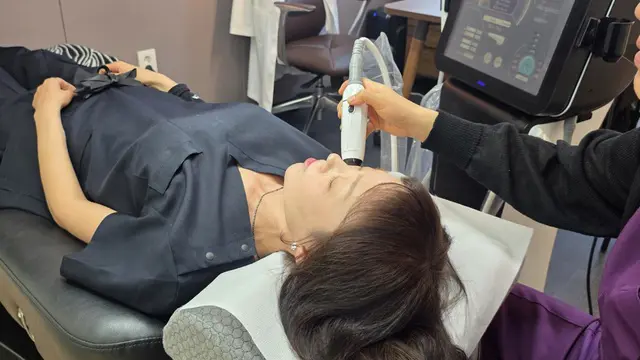
The Liftera-A2 procedure is completed in a single clinic visit and does not require hospital admission, sedation, or general anaesthesia. The following describes the standard patient pathway at Return Clinic.
- Medical Consultation and Skin Assessment: Your visit begins with a full medical history review, including current medications, previous aesthetic procedures, implanted devices, skin conditions, and any relevant systemic health issues. Your skin is then assessed for laxity pattern, thickness, and treatment-zone suitability. Photographic documentation may be taken for baseline comparison, with your consent.
- Treatment Planning and Consent: Your physician-approved treatment map is defined — which zones will be treated, which transducer depths will be used, and how energy will be distributed. Expected outcomes, limitations, risks, and alternatives are explained in plain language, and written informed consent is obtained. If HIFU lifting is not the right choice for your concern, this is the point at which that is discussed honestly.
- Preparation: The treatment area is cleansed and, where appropriate, a topical anaesthetic cream is applied and left for a period before treatment to improve comfort. Ultrasound coupling gel is then applied so that energy transmits efficiently through the skin surface.
- Liftera-A2 Energy Delivery: The handpiece is applied to the skin and moved along the mapped treatment lines while focused ultrasound energy is delivered at the selected depths. Most patients describe intermittent warmth, tingling, or brief deep prickling sensations that correspond to energy delivery. Sensation varies considerably between individuals and between zones, and settings can be adjusted during the session for comfort.
- Immediate Aftercare: The gel is removed, the skin is cleansed, and soothing care with cooling and appropriate topical products is applied. Mild redness, warmth, slight swelling, or tenderness to touch may be present immediately after treatment. Most patients are able to return to normal daily activity, including work, on the same day.
- Follow-Up and Review: A follow-up review is scheduled so that response can be assessed and any questions addressed. Because the collagen remodelling response is gradual, initial changes may be perceived within the first few weeks, with further development typically continuing over the following two to three months. Whether an additional session or a maintenance schedule is appropriate is decided at review, based on your individual response.
Possible Side Effects and Risks
Common and expected effects include redness, warmth, mild swelling, tenderness, temporary tightness, and occasional small bruising in the treated area. These are usually short-lived and self-limiting.
Less common effects may include prolonged tenderness, small areas of firmness or nodularity under the skin, temporary numbness or altered sensation, or transient irregularity in skin texture. Rare complications reported with focused ultrasound treatments include burns, blistering, scarring, unwanted localised fat reduction or contour irregularity, and temporary nerve-related effects such as muscle weakness or asymmetry in the treated region. Serious complications are uncommon, but they are possible, and no aesthetic procedure is entirely without risk.
Patients are given clear instructions on what to monitor and how to contact the clinic. Any unexpected pain, blistering, spreading redness, facial asymmetry, or new weakness after treatment should be reported to the clinic promptly, and severe or rapidly progressing symptoms warrant urgent medical assessment. A qualified medical professional should always be consulted for diagnosis and individualised treatment decisions.
Why Choose Return Clinic for Liftera-A2 HIFU Lifting and Non-Surgical Skin Tightening?
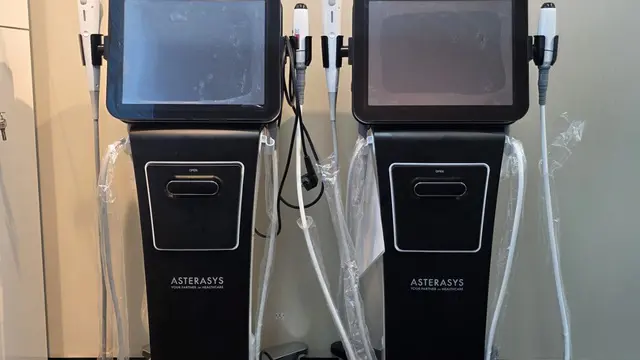
Return Clinic approaches aesthetic dermatology as clinical medicine. The Stem Cell & Dermatology department is structured so that energy-based lifting protocols operate within a defined medical framework — documented suitability criteria, screening for systemic contraindications, standardised consent, and a clear pathway for managing any adverse event. For patients, this translates into a consultation that asks about your health, not only about your appearance.
That governance framework is anchored by Dr. Hyung Geon Kim, M.D., Ph.D. — a graduate of Seoul National University College of Medicine, fellowship-trained at Asan Medical Center, and a former Professor at Case Western Reserve University Hospital in the United States, with prior service as Chief of Internal Medicine and Medical Director of a general hospital. His academic background spans a Master's degree researching chronic viral hepatitis and a Ph.D. in Preventive Medicine analysing hepatocellular carcinoma treatment, alongside board certification in Internal Medicine and subspecialty certification in Gastrointestinal Endoscopy. This is not device marketing experience; it is senior hospital-grade medical leadership applied to patient safety standards.
Return Clinic's clinical philosophy is deliberately conservative. Liftera-A2 HIFU lifting is offered where it is indicated and declined where it is not, and patients whose degree of laxity is beyond the reasonable scope of non-surgical tightening are told so directly and advised toward an appropriate surgical consultation instead. The clinic's position is that an honest "no" protects a patient's outcome and finances better than an optimistic "yes."\n\n#### Clinic USPs\n\n- Hospital-grade medical governance: Aesthetic protocols operate under the oversight of an M.D., Ph.D. physician with senior hospital leadership and international academic experience, including systemic health screening as a standard part of the pre-treatment pathway.\n- Individualised, conservative HIFU protocols: Treatment mapping, transducer depth selection, and energy density are planned per patient and per zone — not applied as a fixed, one-size-fits-all package, and not maximised for a stronger sensation of "working."\n- Transparent expectation setting: Every consultation includes an explicit discussion of what Liftera-A2 HIFU lifting can and cannot achieve, alongside risks, alternatives, and the honest limits of non-surgical tightening. No guaranteed outcomes are offered.\n- Comfortable pathway for international and English-speaking patients: Consultation, consent, and aftercare instructions are structured to be clearly understood by patients travelling from overseas, with a treatment that requires no hospital admission and minimal interruption to travel plans.\n\n## Patient Experience\n\nThe following are anonymised, composite examples that reflect the typical patient profiles and realistic expectations described during Return Clinic consultations. They are illustrative and do not represent verified individual testimonials, guaranteed outcomes, or predicted results for any other patient.\n\n## Jawline Definition Patient, 40s\n\nThis patient's primary concern was a jawline that had begun to lose its clean angle, most noticeable to her in photographs taken from the side. After medical screening and a zone-by-zone assessment, a conservative Liftera-A2 protocol was planned across the lower face and submental area, combining a deeper structural depth with a mid-dermal setting. She reported mild tenderness for several days and described the contour along her jaw as looking somewhat firmer and better defined by her follow-up review, while noting that the change was subtle rather than transformative.\n\n## Neck Firmness Patient, 50s\n\nThis patient was concerned less about facial contour and more about fine crepey texture along the front of the neck, which she felt made her neck appear older than her face. Following consultation and screening, a shallow-depth Liftera-A2 protocol with reduced energy density was planned for the anterior neck, with careful avoidance of sensitive structures. She experienced short-lived redness on the day of treatment and reported at review that the skin felt firmer to the touch and that texture appeared smoother, while understanding that maintenance would likely be part of her longer-term plan.\n\n## Firmer Contours, Assessed Properly, Without Surgery\n\nThe most important step in non-surgical skin tightening is not the treatment itself — it is the assessment that determines whether the treatment is right for you at all. Return Clinic's Liftera-A2 HIFU lifting consultation begins with your medical history and a zone-by-zone evaluation of your skin, so that any recommendation you receive is grounded in clinical suitability rather than in a standard package.\n\nPrimary CTA: [Book Your Liftera-A2 HIFU Lifting Consultation Today] — Reserve a personalised, no-obligation medical assessment with the Return Clinic team, where your skin laxity, medical history, and aesthetic goals will be reviewed in full, your suitability for non-surgical HIFU skin tightening will be honestly evaluated, and every available option, limitation, and risk will be explained clearly before you decide whether to proceed.\n\nSecondary Option: Prefer to speak with someone first? Call the Return Clinic appointment desk to reach our patient coordination team, who can answer questions about the Liftera-A2 HIFU lifting procedure, explain what happens at your consultation, and arrange a time that suits your schedule — including for international patients planning a visit.\n\nIndividual clinical results and recovery timelines may vary depending on scalp/skin condition and personalized treatment planning. Temporary redness, mild swelling, or tenderness may occur following treatment.
Other Services
Explore additional treatments offered by our specialists.
Liftera-A2 HIFU Lifting
Liftera-A2 HIFU lifting is a non-surgical skin tightening procedure that uses high-intensity focused ultrasound to deliver heat energy to precise depths beneath the skin surface.
Learn More

Medical SMP Hair Loss Care
Scalp micropigmentation occupies a distinct position and is not a substitute for medical or surgical hair-loss management.
Learn More

SMP Hairline
SMP hairline treatment applies this technique specifically to the frontal hairline — the area that frames the face and is usually the first thing both the patient and other people notice.
Learn More