Personalized Medical Care & Dedicated International Patient Concierge

Hair Loss & Hair Restoration · Consultation Required
Hair Loss Diagnosis & Treatment
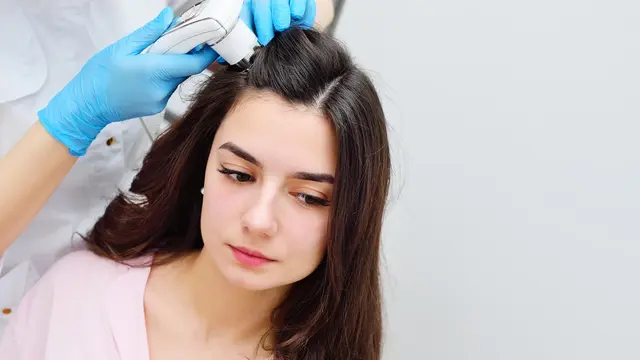
Hair loss diagnosis and treatment is a structured medical process: before anything is applied to the scalp, the pattern, distribution, and visible characteristics of your hair loss are assessed by a…
Schedule a ConsultationWhat is hair loss diagnosis and treatment at a medical clinic?
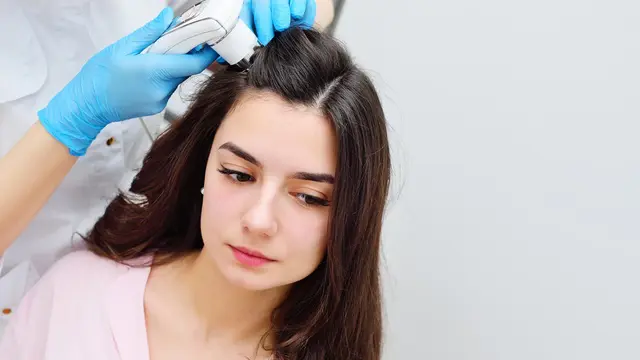
Hair loss diagnosis and treatment is a structured medical process: before anything is applied to the scalp, the pattern, distribution, and visible characteristics of your hair loss are assessed by a physician-led team. That assessment determines whether the concern sits at the frontal hairline, in the crown, in irregular patches across the scalp, or across a broad area — and it determines how, and how much, treatment should be delivered. The principle is simple and conservative: understand the presentation first, then treat only what is genuinely needed.
Our clinic's non-surgical treatment pathway for visible hair loss is SMP — Scalp Micro Pigmentation, delivered as a medical tattoo procedure. SMP places specialised pigment into the superficial layer of the scalp in fine, individual points that replicate the visual appearance of natural hair follicles. It does not grow hair and it is not presented as a hair-growth therapy. What it does is reduce the visual contrast between scalp and hair, so that thinning areas read as denser and hairline edges read as more defined.
Who Needs Hair Loss Diagnosis?
Candidacy for hair loss diagnosis and SMP treatment is determined at consultation, not from a photograph or a checklist. That said, certain concerns and patient profiles come up consistently, and the following list may help you recognise whether an assessment would be worthwhile in your case. If your situation is not described below, it does not mean treatment is unsuitable — it means the question is best answered in person.
- Adults, broadly in their 20s through their 60s, with visible hairline recession: patients who notice that the frontal hairline has moved back, that the temporal corners have deepened, or that the outline of the hairline has become soft and undefined against the forehead.
- Patients with irregular or partial hair loss: areas of loss that do not follow a neat pattern, appearing as patches or uneven zones across the scalp, where the contrast between hair and exposed scalp is the primary visual concern.
- Patients with crown or vertex thinning: thinning at the top and back of the head, which is often noticed by others before the patient sees it themselves, and which becomes most visible under overhead lighting or in photographs taken from above.
- Patients with reduced overall density and scalp show-through: hair that is still present but no longer dense enough to conceal the scalp, particularly noticeable when hair is wet, freshly washed, or styled back.
- Patients who wear very short, clipped, or shaved hairstyles: those who want the clean, even appearance of a defined short hairstyle rather than visible patchiness across a shaved scalp.
- Patients who have undergone hair transplant surgery and are in the growth-in period: those looking for a way to manage the visual interim while transplanted hair develops.
- Patients who prefer a non-surgical approach: those who are not ready for, or not interested in, surgery, and who want an option with no incisions and no extended recovery.
- Patients tired of daily concealment routines: those currently relying on fibre powders, sprays, styling workarounds, or hats, who would prefer a result that does not need to be reapplied each morning.
If you are experiencing sudden, rapid, or patchy hair loss of unclear cause, hair loss accompanied by scalp pain, inflammation, sores, or scaling, or hair loss alongside other systemic symptoms, please raise this at the start of your consultation or seek prompt medical evaluation — those presentations require diagnostic assessment before any cosmetic treatment is considered.
Meet the Specialist in Hair Loss & Hair Restoration
Our hair loss diagnosis and treatment service operates under formal medical direction, within a department that also encompasses stem cell and dermatological care. The clinical governance framework — patient screening, medical oversight of treatment standards, hygiene and safety protocol, and follow-up review — is led by the clinic's medical director.
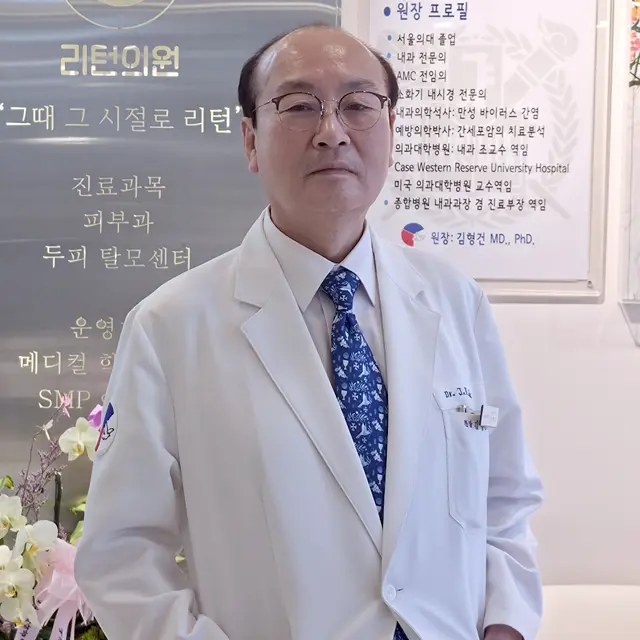
Dr. Hyung Geon Kim, M.D., Ph.D. — Medical Leadership
Dr. Kim is a board-certified specialist in Internal Medicine and a certified Gastrointestinal Endoscopy subspecialist of the Korean Society of Gastrointestinal Endoscopy. He is a graduate of Seoul National University College of Medicine, holds a Master's degree in Internal Medicine with research in chronic viral hepatitis, and a Ph.D. in Preventive Medicine with research analysing hepatocellular carcinoma treatment. He completed fellowship training at Asan Medical Center and has served as Assistant Professor in the Department of Internal Medicine at a medical university hospital, as Professor at Case Western Reserve University Hospital in the United States, and as both Chief of Internal Medicine and Medical Director at a general hospital.
His clinical specialisation is in liver disease, gastrointestinal disorders, and advanced endoscopic procedures. Within the hair loss service, his contribution is not procedural artistry but medical rigour: general health screening before treatment, oversight of patient safety and infection-control standards, and the discipline of a diagnosis-first approach carried over from decades of internal medicine practice. His international academic background also supports clear, unhurried communication with English-speaking patients.
Hair Loss Diagnosis Areas and Expected Improvements
Hair loss rarely presents identically in two people, which is why treatment areas are mapped individually rather than applied to a standard template. The zones below are the areas most commonly addressed, and any one of them may be treated alone or in combination.
- The frontal hairline: this is the area that frames the face and the one most patients notice first. Treatment here focuses on redefining the boundary between forehead and hair, softening a receded or indistinct edge, and rebuilding the visual density of the temporal corners. Hairline design is the most individual part of the process — height, shape, curvature, and the degree of softness or definition at the front edge are all discussed and agreed before any pigment is placed, because a hairline that suits one face shape and age will not suit another.
- Irregular and partial hair loss areas: patches of loss that appear in uneven distribution across the scalp create a strong visual contrast that draws the eye. Pigment is placed selectively within and around these zones so that the difference between the patch and the surrounding hair becomes less pronounced. The intention is not to create a uniform block of colour but to blend the transition edges, so that the treated area reads continuously with the hair around it rather than as a defined boundary.
- The crown and vertex: thinning at the top and back of the head is often the most difficult area for a patient to monitor themselves, and the most exposed under direct overhead light. Treatment in this zone concentrates on reducing scalp show-through across the whorl pattern, working with the natural direction in which hair grows outward from the crown. Because this area is viewed from above and behind, density is built to look consistent from those angles as well as from eye level.
- Full-scalp treatment: for patients with extensive loss, or those who wear a clipped or shaved style, the entire scalp can be treated to produce an even, consistent short-hair appearance. This is typically approached in stages across more than one session, with density built progressively so that the overall result develops in a controlled way and can be reviewed between sittings.
Hair Loss Treatment Process and Timeline
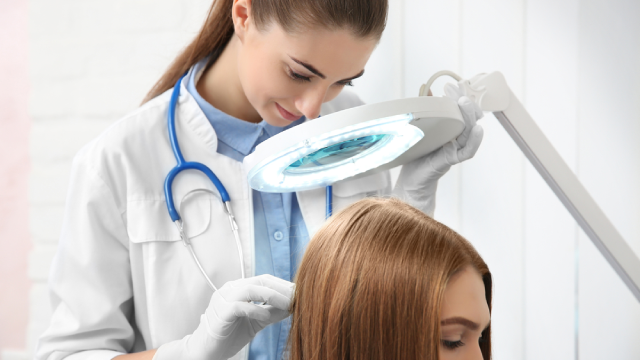
The process is deliberately staged. Nothing is rushed into a single appointment, and you will know at each point what is happening and why.
- Consultation and hair loss diagnosis: your scalp is examined and the pattern, distribution, and extent of hair loss are assessed. Your medical history and general health are reviewed, existing hair colour and skin tone are noted, and your goals are discussed in detail. If any finding suggests that further medical evaluation is appropriate before cosmetic treatment, this is raised with you directly at this stage.
- Design and pigment planning: the treatment area is mapped and, where the hairline is involved, the shape and height of the new outline are drawn and reviewed with you before proceeding. Pigment tone is selected to sit naturally against your existing hair and skin, and the planned density is agreed. Nothing proceeds until you are satisfied with the design.
- The treatment session: pigment is deposited into the superficial layer of the scalp in fine individual points, following the mapped plan. Session length depends on the size of the area being treated — a single hairline zone is considerably shorter than a full-scalp session. The procedure is non-surgical and most patients describe the sensation as a manageable pinpoint pressure rather than as significant pain.
- Immediate aftercare: you will be able to leave and resume ordinary daily activity straight away — there is no extended downtime, and in most cases no special precautions beyond the instructions below. Some mild redness or tenderness across the treated area is common in the hours following a session and typically settles on its own.
- The first week: aftercare instructions. Please avoid alcohol on the day of your procedure. Avoid activities that cause heavy sweating — exercise, swimming, and saunas — for the first several days. Do not shampoo for the first 24 hours; after that, wash gently, avoiding direct strong water pressure on the treated area and avoiding vigorous scrubbing with the fingertips. Avoid perming or dyeing your hair for approximately one week.
- Follow-up review and staged sessions: you will be reviewed after the treated area has settled, so that the result can be assessed in its final appearance rather than immediately after the session. Where the plan involves building density progressively — commonly the case with larger areas or full-scalp treatment — the timing of any additional session is decided at that review, based on how the first result has settled.
SMP Hair Loss Treatment Results, Safety, and Longevity
SMP is a pigment-based treatment, and pigment placed in the skin changes gradually over time. Patients should expect the appearance of the treated area to soften slowly across an extended period rather than to remain permanently fixed, and periodic review or refinement may be discussed as part of ongoing care. We do not describe SMP as a permanent result, and we do not attach a fixed number of years to it, because the rate of change differs between individuals according to skin type, sun exposure, scalp condition, and the depth and density at which pigment was originally placed.
On safety: SMP is non-surgical and does not involve incisions, grafting, or general anaesthesia, which removes an entire category of surgical risk. Treatment is performed in a medical clinic environment under physician-supervised hygiene and infection-control protocol, using single-use consumables. Our conservative approach — building density in stages rather than maximising it in one sitting — exists specifically so that the result can be reviewed and adjusted before more is added, rather than requiring correction after the fact.
As with any procedure involving the skin, side effects are possible. The most common are temporary and mild: redness, tenderness, or slight swelling of the treated area in the hours to days after a session. Less commonly, patients may experience irritation of the scalp. Infection is uncommon but possible, and the aftercare instructions provided — particularly around sweating, water exposure, and washing technique in the first days — exist to minimise that risk. Pigment reactions and sensitivity are rare but cannot be excluded entirely. Serious complications are rare, but they are not impossible, and any unexpected pain, spreading redness, discharge, or fever after a session should prompt you to contact the clinic promptly.
Why Choose Return Clinic for Hair Loss Diagnosis?
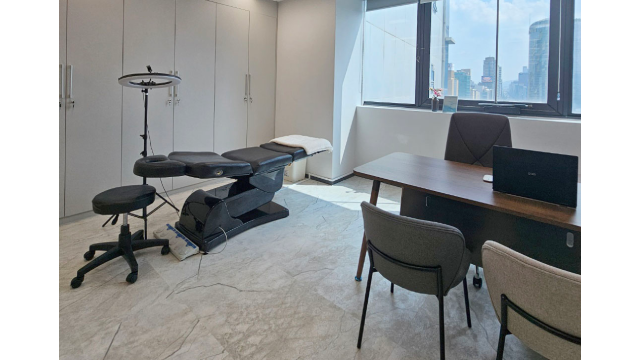
Our hair loss service sits within a Stem Cell & Dermatology department, and that context shapes how we work. Hair loss is treated as a medical concern requiring assessment, not as a retail service delivered from a menu. The consultation comes first, the diagnosis informs the plan, and the plan is built around what your presentation actually requires — including, where appropriate, the recommendation that a particular area does not need treating at all.
That medical framing is anchored in genuine clinical credentials. Our medical direction is led by a Seoul National University College of Medicine graduate holding both a Master's degree in Internal Medicine and a Ph.D. in Preventive Medicine, fellowship-trained at Asan Medical Center, board-certified in Internal Medicine, and formerly a Professor at Case Western Reserve University Hospital in the United States as well as Chief of Internal Medicine and Medical Director at a general hospital. Patients are screened and overseen within that framework, and international patients benefit from a medical director with substantial experience practising and teaching in an English-speaking academic environment.
Practically, the service is built around flexibility and low disruption. You can treat one area or the entire scalp. You can proceed whether you have partial hair remaining or almost none. And you can do all of it without surgery, without a donor site, and without clearing your calendar for a recovery period.
Clinic USPs:
- Physician-led medical governance: hair loss assessment and SMP treatment protocols operate under the oversight of a board-certified Internal Medicine specialist with M.D., Master's, and Ph.D. qualifications and international academic experience.
- Diagnosis-first, treat-only-what-is-needed approach: the pattern and extent of your hair loss are assessed before any pigment is placed, and density is built in stages so results can be reviewed rather than over-applied.
- Full flexibility of treatment scope: a single hairline, one irregular patch, the crown alone, or the entire scalp — treatment is matched to your concern, not to a fixed package.
- Non-surgical with immediate return to daily life: no incisions, no donor area, and no extended downtime, with short-term aftercare limited to a few clearly explained precautions.
- Compatible with past or future hair transplant surgery: SMP can be planned around a transplant you have already had, or around one you are still considering.
Real Patient Experiences
The following are anonymised, composite examples reflecting the kinds of concerns and treatment pathways commonly seen in this service. They are illustrative and are not presented as individual testimonials or as a prediction of your own result.
Hairline Recession Patient, 30s
He had become conscious of a receding frontal hairline and deepening temporal corners, and had spent several years styling his hair forward to compensate. After a consultation and hairline design session, SMP was carried out on the frontal zone alone, with density built conservatively and reviewed before any refinement. He reported that the outline of his hairline looked more defined and that he no longer felt the need to plan his hairstyle around concealment.
Crown Thinning Patient, 40s
She had noticed increasing scalp visibility at the crown in photographs taken from above and under bright overhead lighting, though her hair elsewhere remained relatively dense. Treatment focused on the vertex, with pigment placed between existing hairs to reduce show-through and blend the transition into the surrounding hair. Her feedback centred on feeling more comfortable in group photographs and under office lighting.
Ready to Understand Your Hair Loss?
Take the first step: book your hair loss diagnosis and SMP consultation today.
Primary CTA — [Book Your Hair Loss Consultation Now] : Your consultation begins with a proper assessment of your scalp, the pattern of your hair loss, and your goals — not a sales conversation. You will receive a clear, honest explanation of whether SMP medical tattoo treatment suits your presentation, exactly what it can and cannot achieve for you, which areas would be treated, how the sessions would be staged, and what aftercare involves, so that you can make an unpressured decision in your own time.
Prefer to speak with someone first? Call the clinic to reach our hair restoration patient coordination desk, where our consultation team can answer your questions about hair loss assessment, SMP treatment scope, session planning, and international patient arrangements, and help you schedule an appointment at a time that suits you.
Individual clinical results and recovery timelines may vary depending on scalp/skin condition and personalized treatment planning. Temporary redness, mild swelling, or tenderness may occur following treatment.
Other Services
Explore additional treatments offered by our specialists.

Liftera-A2 HIFU Lifting
Liftera-A2 HIFU lifting is a non-surgical skin tightening procedure that uses high-intensity focused ultrasound to deliver heat energy to precise depths beneath the skin surface.
Learn More

Medical SMP Hair Loss Care
Scalp micropigmentation occupies a distinct position and is not a substitute for medical or surgical hair-loss management.
Learn More

SMP Hairline
SMP hairline treatment applies this technique specifically to the frontal hairline — the area that frames the face and is usually the first thing both the patient and other people notice.
Learn More