Personalized Medical Care & Dedicated International Patient Concierge


Medical Guide
Hair Loss and Restoration: Choosing the Right Approach
Hair Loss and Restoration: Choosing the Right Approach Medically reviewed by Dr. Hyung Geon Kim, M.D., Ph.D., Board-Certified Internal Medicine Specialist People researching hair loss treatment usually start…
Schedule a ConsultationHair Loss and Restoration: Choosing the Right Approach
Medically reviewed by Dr. Hyung Geon Kim, M.D., Ph.D., Board-Certified Internal Medicine Specialist
People researching hair loss treatment usually start by comparing procedures. That is the wrong first move, and it is why so much of the research feels circular — every option sounds reasonable in isolation and there is no way to choose between them from a website.
Return Clinic's Hair Loss & Hair Restoration is not a single procedure. The clinic describes it as a treatment approach where the specific method is selected based on the individual's hair-loss condition, scalp status, and treatment needs. That sentence is the actual content of the service: the selection, not the menu.
This page is about how that selection works and what it needs from you.
The three inputs
The clinic states the consultation assesses the hair-loss pattern, the affected areas, scalp condition, and individual treatment goals, and that the process runs consultation, assessment of the hair-loss area, personalized treatment, then aftercare guidance.
Those inputs do different jobs.
Pattern and affected areas answer what kind of loss this is and where. Loss has a geography, and the geography is one of the clearest pointers to a cause. The American Academy of Dermatology's material on the causes of hair loss is worth reading before your consultation for exactly this reason — it gives you the vocabulary to describe your own pattern accurately.
Scalp condition answers whether the surface itself needs attention first, and whether it can take a given treatment.
Treatment goals answer what you are actually trying to achieve. This sounds soft and it is the most decisive input of the three, because two people with identical scalps and different goals belong in different treatments.
The distinction that organizes everything
There is one split that makes the whole category legible, and it is the split between changing the appearance of hair and acting on the hair itself.
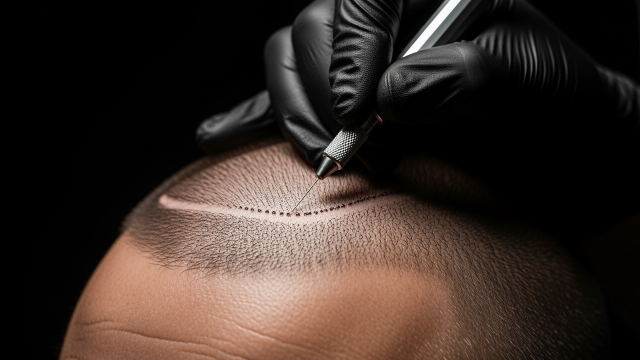
Appearance. Scalp micropigmentation places pigment to create the look of density. It is immediate, it is visible from the first session, and the clinic's own approved claim states that it does not regrow hair.
Biology. The clinic's diagnostic and recovery-care pathways address what is happening to the hair. Results there develop gradually, because hair follicles run on growth cycles — the clinic says so directly, noting that improvement is gradual, may take months to become noticeable, and that immediate regrowth should not be expected.
Almost every confused conversation about hair loss treatment comes from mixing these two up. They operate on different timescales, they produce different kinds of evidence, and they answer different questions. A patient who wants to look denser next month and a patient who wants to keep what they have are not choosing between competing options; they are in different categories.
Where each approach fits
Within that frame, the clinic's services sort cleanly.
When the loss is established and visible. If there is a defined area where hair is sparse or absent and the goal is that it should not look that way, the appearance route is the direct answer. Return Clinic's SMP work covers thinning, receding hairlines, bald patches, widened part lines and scalp scars.
When the loss is early and moving. If you are shedding more than you were and the density has only recently changed, the priority is understanding why. The clinic's Hair Loss Diagnosis & Treatment pathway reviews hair-loss history, family history, medications, health conditions, scalp condition and the pattern of loss, with scalp and hair examination to help identify the likely cause.
When you want to support what you still have. Hair Loss Recovery Care is described as care focused on reducing hair loss and supporting healthier hair growth and scalp condition, for people with thinning, excessive shedding or early-stage loss who may benefit from non-surgical care.
When the two overlap. They frequently do. Someone with early loss they want investigated and visible thinning they want addressed is a normal case, not a contradiction.
What makes someone unsuitable
The clinic is direct about this and it is the most useful sentence in its whole hair-loss material: people with untreated scalp conditions or medical causes of hair loss that require diagnosis and treatment first are not suitable.
That is an ordering rule. Diagnosis precedes cosmetic decisions, and it precedes them for a practical reason rather than a procedural one — a treatable cause changes what you would want done. Treating the cause can alter the picture that a cosmetic approach would have been designed around, and designing against a baseline that is about to move is how people end up dissatisfied with technically competent work.
The recovery-care material adds the same idea from another direction: patients with unexplained or untreated underlying causes, or those requiring a different specialist treatment, are not suitable.
MedlinePlus, the US National Library of Medicine's patient service, covers the general territory of hair loss causes, and it is a reasonable starting point if you have never had the question examined.
Shedding is not the same as loss
One distinction worth getting right before you book anything, because it changes the answer completely.
Increased shedding — more hair in the drain, more on the pillow — is not automatically the same thing as progressive hair loss. The AAD publishes material specifically on telling the two apart, and the difference matters because several causes of sudden shedding resolve on their own or resolve when the trigger is addressed.
The practical consequence is that timing matters. Someone whose shedding began recently after an identifiable event is in a different situation from someone whose density has declined steadily over years, and the first person may be about to pay for a treatment aimed at a problem that is already resolving.
Being able to describe which of the two you have, with dates, is worth more at consultation than any amount of research into procedures.
What to expect from each timescale
Setting expectations correctly is most of what determines satisfaction here.
Appearance work shows a result at the first session and completes over a course. The clinic states that session count and treatment time vary according to scalp condition, and that the appearance develops as the treated area heals.
Biological approaches take months. The clinic's own material says improvement is gradual because follicles follow growth cycles, that results may take months to become noticeable, and that duration depends on the underlying cause, the treatment and ongoing management. Recovery Care specifically is described as developing gradually and possibly requiring multiple sessions and ongoing maintenance.
A patient who expects the second timescale from the first will be confused; a patient who expects the first from the second will conclude, at week six, that nothing is working. Both are avoidable with one conversation.
Risks, in general terms
Because this is an umbrella, the risks depend on what is actually selected.
The specialty-level material lists possible redness, swelling, tenderness, irritation, pigment changes or infection, with outcomes varying by patient. The diagnostic pathway notes that risks depend on the treatment used and may include temporary redness, swelling, tenderness, bruising or irritation with injectable or procedural treatments, with more significant complications possible and to be discussed at consultation.
The honest reading is that no useful risk list exists until the approach is chosen. Which is another argument for treating the consultation as the substance of this service rather than as the gateway to it.
Diagnosis first, then the menu
If this page has one instruction, it is about order rather than choice.
Do not arrive having chosen a treatment. Arrive having described a problem — when it started, how it has moved, where it is, what changed in your life around the time it began, what is in your family, what medications you take. The clinic's diagnostic pathway asks for exactly that list, and it asks for it because the answer to "which treatment" is derived from it rather than selected alongside it.
There is a reason this is hard advice to follow. Treatments are researchable and diagnoses are not; you can spend a satisfying evening comparing procedures and no evening at all determining what is wrong with your scalp. So people arrive with a shortlist, and a shortlist quietly reframes the consultation from "what is happening here" into "yes or no to this".
The cost of that reframing is real. It puts the clinician in the position of responding to your conclusion instead of forming one, and the most valuable thing a consultation can produce — that your loss has a cause you did not know about, and that treating it changes what you should want — is precisely the finding a yes-or-no conversation never reaches.
So bring the history, not the shortlist. Ask what the pattern suggests before you ask what it costs in time or sessions. And if the answer is that something should be investigated or treated before anything cosmetic happens, treat that as the consultation working rather than as a delay — the clinic's own unsuitability rule says the same thing, and it says it before you have paid for anything.
Send the history through the contact page. The about page describes the practice the assessment sits in, which is worth a read before you decide how far to take the conversation.
The Bottom Line
- Hair Loss & Hair Restoration is a selection process, not a single treatment; the method follows from hair-loss condition, scalp status and treatment needs.
- The organizing split is between changing how dense hair looks and acting on the hair itself — different timescales, different evidence, different questions.
- The clinic will not treat over an untreated medical cause of hair loss, because a treatable cause changes what you would want done cosmetically.
- Increased shedding and progressive loss are different findings; being able to describe which you have, with dates, is worth more than procedure research.
- Arrive with a history rather than a shortlist, because a shortlist turns the consultation into a yes-or-no about your own conclusion.
Frequently Asked Questions
Is Hair Loss & Hair Restoration one procedure?
No. The clinic describes it as an approach where the specific method is selected based on the individual's hair-loss condition, scalp status and treatment needs.
How does the clinic decide which approach I need?
By assessing the hair-loss pattern, the affected areas, scalp condition and your treatment goals, then building a personalized plan and aftercare guidance from those.
What is the main difference between the options?
Whether they change how dense hair looks or act on the hair itself. The first shows a result immediately; the second develops over months because follicles run on growth cycles.
Why won't the clinic treat me if the cause is unknown?
Because a treatable cause can change what you would want done, and designing a cosmetic result against a baseline that is about to move leads to dissatisfaction with competent work.
Is shedding the same as hair loss?
Not necessarily. Several causes of sudden shedding resolve on their own or once the trigger is addressed, which is why the timing and history of your symptoms matter so much.
How long before I see anything from a biological approach?
Months. The clinic states improvement is gradual, may take months to become noticeable, and that immediate regrowth should not be expected.
Can I have more than one approach?
Yes, and it is common — early loss you want investigated and visible thinning you want addressed are not in conflict. How they are sequenced is a consultation question.
What should I bring to the consultation?
When it started, how it has progressed, where it is, family history, medications, health conditions, and any previous hair treatments. That list is what the plan is derived from.
This article is for general informational purposes and does not constitute individualized medical advice. It is not a self-diagnosis tool. The approach appropriate to your hair loss can only be determined through a consultation with a qualified dermatologist or other appropriately qualified clinician who has examined your scalp in person.
More Articles
Continue reading our clinical guides.

Return Clinic's Non-Surgical Options Compared by Concern
Return Clinic's Non-Surgical Options Compared by Concern Medically reviewed by Dr. Hyung Geon Kim, M.D., Ph.D., Board-Certified Internal Medicine Specialist A clinic menu is organized by what the clinic does.
Learn More
SMP scalp tattoo guide to Korea from Beijing: Guide to appointments, face-to-face consultations and return journeys
北京去韩国做SMP头皮纹发:行程、预约与术后返程规划 医学审核 Dr. Hyung Geon Kim, 医学博士,内科专科医师 要点总结 京首双城短途直飞优势 :从北京首都国际机场或北京大兴国际机场出发,直飞首尔金浦国际机场或仁川国际机场的航程仅需约两小时左右;这一便捷的交通条件使 北京去韩国做SMP 成为周末短途或小长假出行的可行选择。
Learn More

Is Scalp Micropigmentation Painful? A Straight Answer
Is Scalp Micropigmentation Painful? A Straight Answer Medically reviewed by Dr. Hyung Geon Kim, M.D., Ph.D., Board-Certified Internal Medicine Specialist Pain is near the top of what US patients ask Return…
Learn More