Personalized Medical Care & Dedicated International Patient Concierge


Medical Guide
Do Skin Boosters Hurt? What to Expect During Injection
Do Skin Boosters Hurt? What to Expect During Injection Medically reviewed by Dr. Hyung Geon Kim, M.D., Ph.D., Board-Certified Internal Medicine Specialist The question is usually asked quietly and answered…
Schedule a ConsultationDo Skin Boosters Hurt? What to Expect During Injection
Medically reviewed by Dr. Hyung Geon Kim, M.D., Ph.D., Board-Certified Internal Medicine Specialist
The question is usually asked quietly and answered vaguely, which helps nobody. Here is the specific version.
Return Clinic states that topical numbing cream may be used to improve comfort during injections. That is the clinic's position, and it is worth unpacking because the sentence contains a conditional that most patients read past.
What the treatment physically is
The clinic's own description of the sequence is short: skin assessment, cleansing, topical numbing if required, fine-needle micro-injections across the treatment area, then post-treatment care.
The phrase that determines the experience is micro-injections across the treatment area. This is not one injection. It is many small ones distributed over a region, because the treatment is meant to affect the quality of the skin across that region rather than to change a single point.
So the sensation is not a single event you brace for. It is a repeated, brief, small sensation over a period, and the total is a function of how many and how long rather than how sharp.
That distinction is the most useful thing to know in advance, because people prepare for the wrong thing. The instinct is to prepare for intensity. What you are actually preparing for is repetition.
Where the numbing fits
Note the conditional. The clinic describes topical numbing as something that may be used, if required, to improve comfort — not as a standard step applied to everybody.
That is a reasonable way to run it. Sensitivity varies, areas vary, and a patient who does not need numbing gains nothing from waiting for it to take effect.
It does mean the question is yours to ask rather than yours to assume. If you know you are sensitive, or if anxiety about the sensation is part of what has delayed you, say so before the appointment rather than during it. The clinic's contact page is the place to raise it, and it is a routine request rather than a difficult one.
Topical numbing also needs time to work. A patient who raises it on arrival is asking for a delay; a patient who raises it at booking is asking for a plan.
What changes how it feels
Four variables, and knowing them turns a vague worry into specific questions.
The area. Skin is not uniformly sensitive. Thinner and more mobile regions register more than thicker ones, which is why an answer about "the face" is less useful than an answer about the specific region in your plan.
How much is being covered. More area means more injections and a longer appointment. The total experience scales with the map rather than with the needle.
Whether numbing was used. The single largest controllable factor, and the one above.
Your own baseline. This is real and it is not a character flaw. Individual sensitivity varies considerably, and a clinician who takes that seriously is easier to be treated by than one who tells you it does not hurt.
What afterward feels like
The clinic's description of recovery for this treatment category is minimal downtime industry-wide. Three effects are named as possible: redness that is temporary, small raised marks where the needle entered, and bruising that is mild.
Those three are worth naming separately because they behave differently.
Redness is the diffuse, immediate one, and it is usually the shortest-lived.\n\nInjection-point bumps are small raised marks where the material was placed. They are the most visible thing in the hours afterward and the most alarming if nobody warned you.
Bruising is the one that can outlast the others and the one most worth planning around, because it is the effect that a concealer has to deal with rather than time alone.
None of that is discomfort in the sense the question asks about. Afterward is generally a matter of appearance rather than sensation.
Preparing, concretely
Four things that genuinely help, in order of how much difference they make.
Ask about numbing at booking. Not on the day. This is the one that changes the experience most.
Schedule around the visible days rather than the uncomfortable ones. If you have something you need to look unremarkable for, count backward from that rather than from the appointment.
Eat beforehand. Feeling unwell during a procedure is more often about an empty stomach than about the procedure.
Say what you are worried about. A clinician who knows you are anxious about needles can work differently. One who does not know cannot.
The American Academy of Dermatology publishes a list of questions worth asking before any cosmetic treatment, and taking a written list to a consultation is a good way to get through the awkward ones rather than skipping them.
What to say during the session
One instruction is worth more than any amount of preparation: if the sensation changes character, say so at the time.
The expected experience is small, repetitive and tolerable. Something that becomes sharp, one-sided, or qualitatively different from the rest of the session is information the person treating you wants, and wants immediately rather than in a review afterward.
Patients tend to stay quiet out of politeness, or because they assume discomfort is the deal they signed up for. It is not. The described experience is mild, and a departure from it is worth naming while it is happening.
The clinic's customer reviews give some sense of how patients describe the experience in their own words, which is a different and sometimes more useful register than a clinical description.
Comfort is planned, not endured
The framing worth leaving with is that comfort during this treatment is mostly a planning outcome rather than a personal quality.
Numbing arranged in advance, an appointment scheduled so that the visible days land somewhere convenient, a clinician who has been told what you are anxious about, and an agreement that you will speak up if something changes — those four are settled before anyone picks up a needle.
Patients who arrange them find the treatment unremarkable. Patients who arrange none of them have the same treatment and a worse afternoon. The difference is not tolerance. It is whether the questions got asked while there was still time to act on the answers.
The Bottom Line
- Return Clinic states topical numbing cream may be used to improve comfort during injections; it is conditional, so ask for it at booking rather than assuming it.
- The treatment is many fine-needle micro-injections across an area, so the experience is repetition rather than intensity.
- Area, coverage, numbing and individual sensitivity are what change how it feels; only two of those are within your control.
- Afterward is described as minimal downtime, with redness, small raised marks at the entry points and mild bruising named as possible — appearance rather than discomfort.
- If the sensation changes character during a session, say so at the time rather than afterward.
Frequently Asked Questions
Do skin boosters hurt?
The treatment is a series of fine-needle micro-injections across an area, and Return Clinic states topical numbing cream may be used to improve comfort. Most of the experience is repetition of a small sensation rather than a single intense one.
Is numbing always used?
No. The clinic describes it as something that may be applied if required, so it is worth requesting in advance if you know you are sensitive. Topical numbing also needs time to take effect, which is why raising it at booking works better than raising it on the day.
Which areas feel it most?
Thinner and more mobile regions of skin tend to register more than thicker ones. Ask specifically about the areas in your own treatment plan rather than about the face in general.
What does it feel like afterward?
The clinic describes minimal downtime for this category and names three possible effects: temporary redness, small raised marks at the entry points, and mild bruising. That is mostly a question of appearance rather than ongoing discomfort.
How long does the appointment take?
It scales with the area being treated, since the treatment is distributed across a region. Ask for an estimate based on your own plan when the plan is agreed.
Can I go straight back out afterward?
Generally yes, with the caveat about visible effects. If bruising or injection marks would be a problem for something you have planned, schedule backward from that rather than forward from the appointment.
What if it hurts more than expected?
Say so during the session. A sensation that becomes sharp or one-sided is different from the expected experience, and the person treating you needs to know while it is happening.
This article is for general informational purposes and does not constitute individualized medical advice. It is not a self-diagnosis tool. Comfort measures, suitability and what to expect can only be determined through a consultation with a qualified dermatologist or other appropriately qualified clinician who has examined your skin in person.
More Articles
Continue reading our clinical guides.
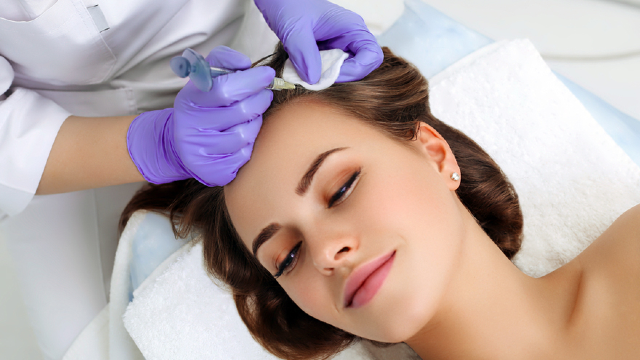
Return Clinic's Non-Surgical Options Compared by Concern
Return Clinic's Non-Surgical Options Compared by Concern Medically reviewed by Dr. Hyung Geon Kim, M.D., Ph.D., Board-Certified Internal Medicine Specialist A clinic menu is organized by what the clinic does.
Learn More
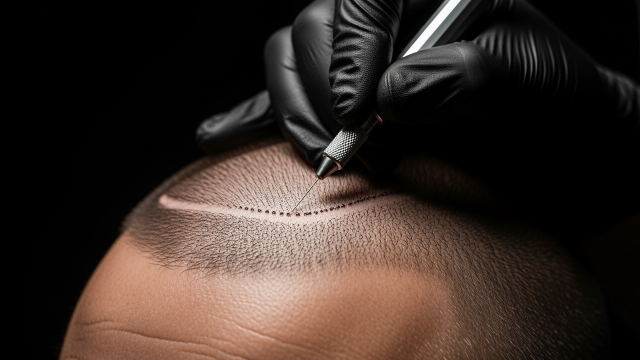
SMP scalp tattoo guide to Korea from Beijing: Guide to appointments, face-to-face consultations and return journeys
北京去韩国做SMP头皮纹发:行程、预约与术后返程规划 医学审核 Dr. Hyung Geon Kim, 医学博士,内科专科医师 要点总结 京首双城短途直飞优势 :从北京首都国际机场或北京大兴国际机场出发,直飞首尔金浦国际机场或仁川国际机场的航程仅需约两小时左右;这一便捷的交通条件使 北京去韩国做SMP 成为周末短途或小长假出行的可行选择。
Learn More
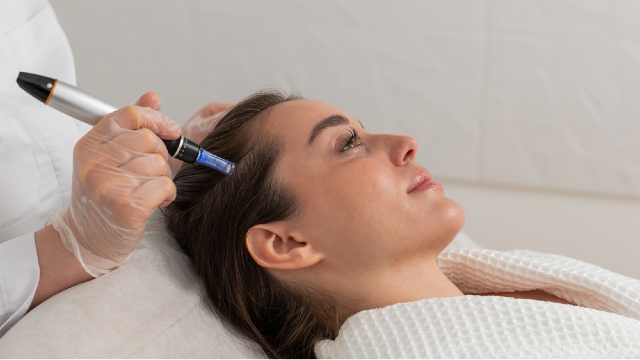
Is Scalp Micropigmentation Painful? A Straight Answer
Is Scalp Micropigmentation Painful? A Straight Answer Medically reviewed by Dr. Hyung Geon Kim, M.D., Ph.D., Board-Certified Internal Medicine Specialist Pain is near the top of what US patients ask Return…
Learn More